Estimated reading time: 10 minutes
Key Takeaways
- Rustic wood cabinets showcase natural imperfections like knots and colour variations, celebrating uniqueness.
- These cabinets appeal to those who appreciate natural materials and are comfortable with unpredictability in design.
- Not suitable for individuals seeking uniformity; painted or engineered options provide more consistency.
- Superior Cabinets’ rustic species include Rustic Oak, Maple, Hickory, Cherry, Black Walnut, and Alder, with solid-wood door options.
- Rustic designs aren’t confined to traditional styles; they can also be contemporary or transitional based on other elements.
Rustic Wood Cabinets: Perfectly Imperfect celebrates real wood just the way nature grew it, complete with knots, grain, colour variation and plenty of character. But why would someone intentionally choose cabinetry where inconsistency and unpredictability are part of the appeal? Let’s explore.
What Are Rustic Wood Cabinets?
Rustic wood cabinets celebrate the natural characteristics of real wood rather than trying to minimize them. Knots, mineral streaks, sapwood, wormholes, grain movement, and noticeable colour variation aren’t details to hide. They are defining characteristics of rustic cabinetry. By using “rustic” grade lumber, the result is a textural, earthy, organic look where every project is unique.
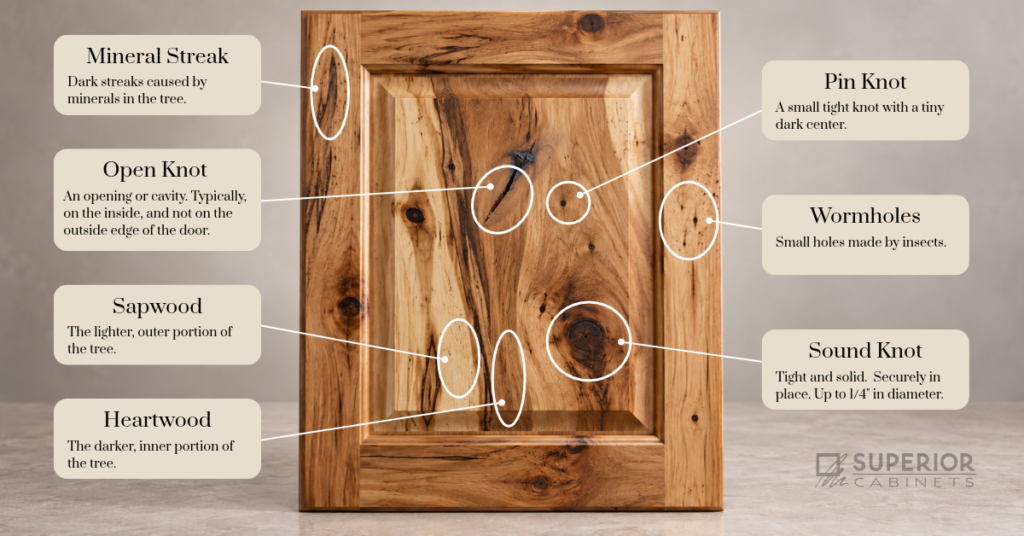
For rustic wood cabinetry, you can select the wood species, door style, finish, and where rustic wood will be used, but you cannot predict exactly where the natural markings will appear or how every door and panel will relate to the next. For a broader explanation of wood grain, colour variation, samples, veneer construction and natural aging, read The Nature of Wood.
Who Should Choose Rustic Cabinets?
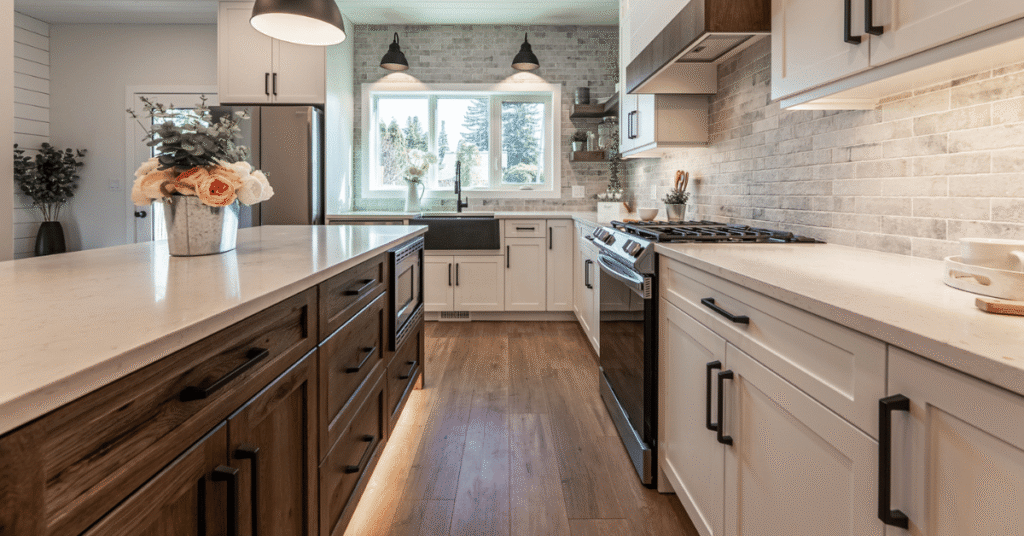
Rustic cabinetry is a strong fit for someone who gravitates toward natural materials and wants the wood to become a focal point. It suits homeowners who see variation as character rather than inconsistency and who are comfortable allowing the material to influence the final look and feel of the room.
“If you value uniqueness and are comfortable with an element of surprise, rustic wood might be for you. The imperfections aren’t flaws. They’re what make it beautiful.”
Who Shouldn’t Choose Rustic Cabinets?
If you want every cabinet door and front to closely match a small sample, or you prefer a highly consistent colour and grain pattern, wood or rustic wood may not be the right choice. Painted or engineered cabinet materials may provide the more controlled appearance you want.
Available Wood Species and Doors
Superior Cabinets offers rustic wood in popular wood species, including Rustic Oak, Maple, Hickory, Cherry, Black Walnut, and Alder. For rustic cabinets, you must choose a solid wood door in one of two constructions: solid wood raised-panel or reverse-raised-panel. For a deeper explanation of Wood Cabinets Doors and What You Should Know, read more on the Design Corner Blog.
What Should You Know Before Ordering Rustic Cabinets?
The most important planning consideration is that not every wood component in the design will be rustic. At Superior Cabinets, rustic characteristics are available on applicable doors and solid components of decorator panels. Mouldings and solid fillers will not be rustic. Veneer-finished ends, finished interiors, top and underside panelling, fillers, toe kicks, and other veneer parts will not have the same rustic characteristics.
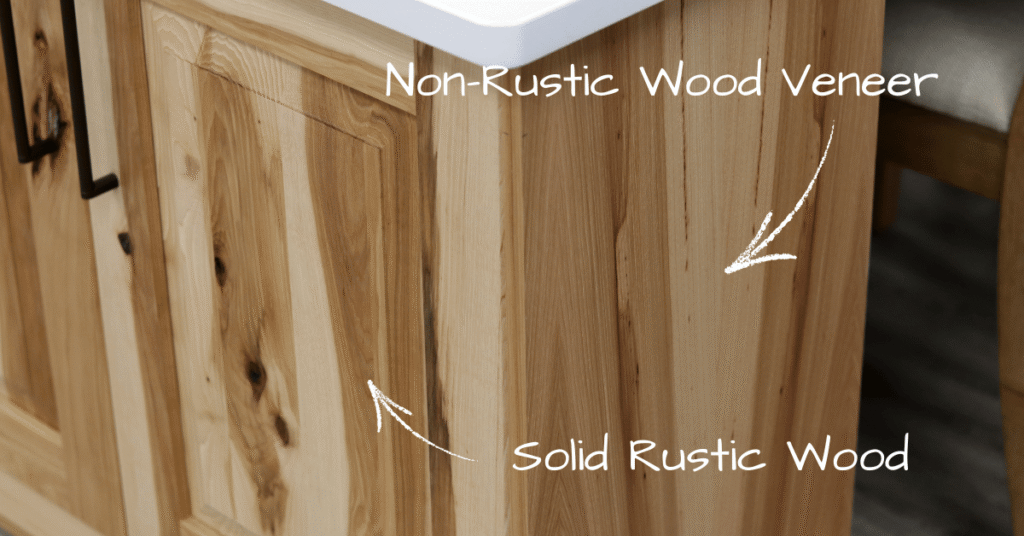
This creates an obvious visual difference between rustic and non-rustic materials. Another variable is that solid wood and veneer can also absorb stain differently. Veneer parts may appear darker or more consistent than adjacent solid rustic doors. This is a natural result of using different wood components within the same cabinet design.
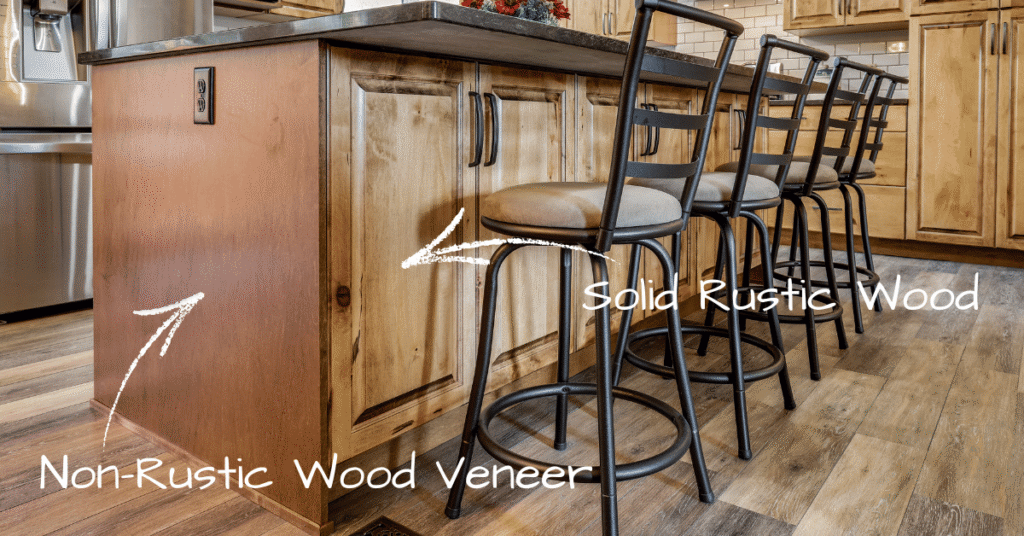
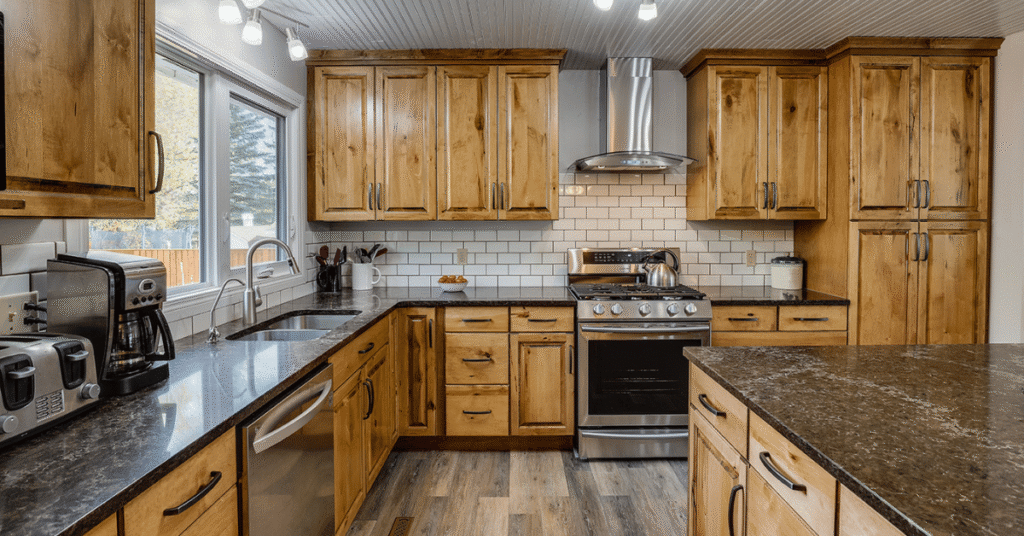
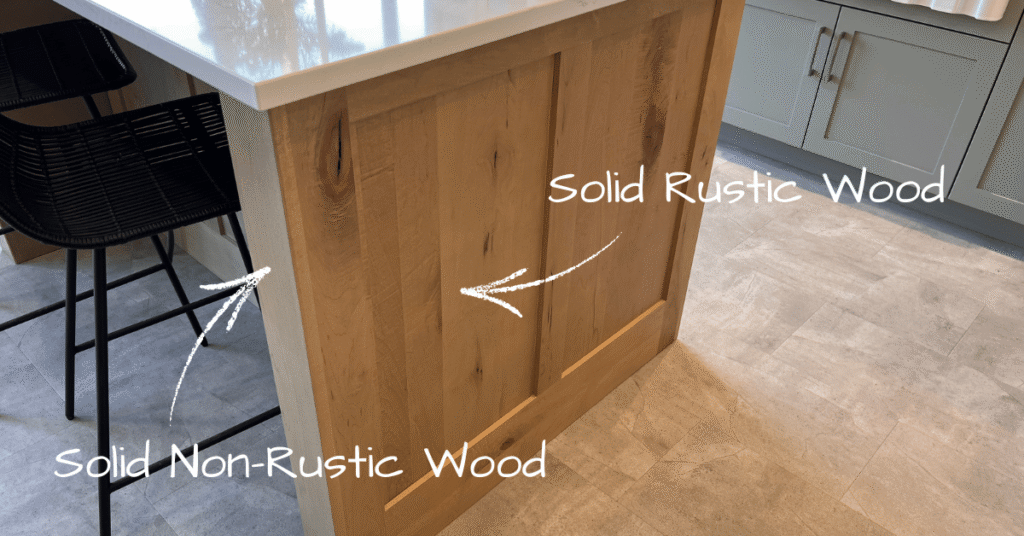
The good news is there may be ways to address this with your Professional Kitchen Designer’s help. First, ask your professional kitchen designer to identify which pieces will display rustic characteristics and which pieces will use matching non-rustic wood or veneer. If rustic character is important in those locations, such as exposed island backs, cabinet ends, and other highly visible areas, you may be able to opt for solid wood door panels or solid decorator back panels for island backs and sides. Again, all cabinet makers and product lines are different, so it’s best to speak with your designer.
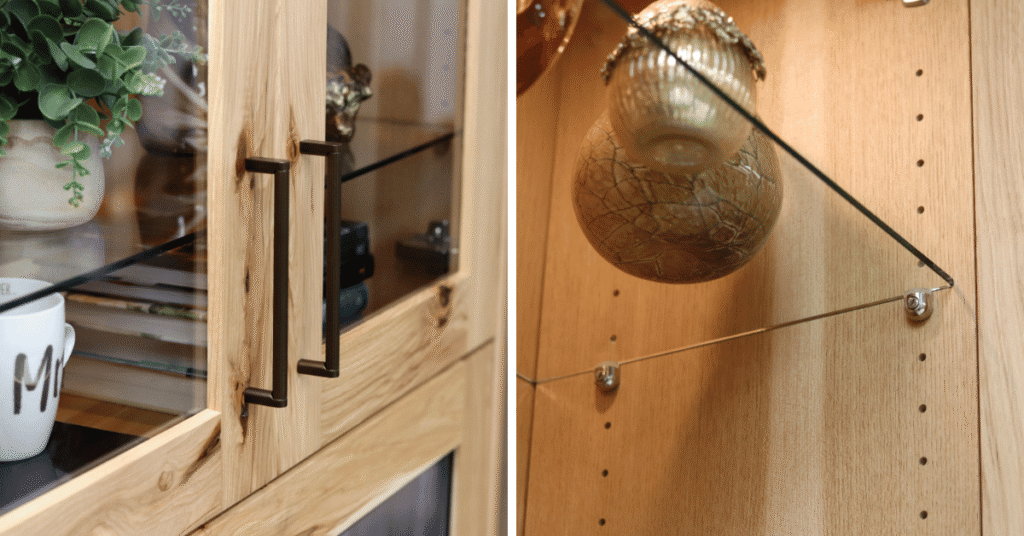
The finished result may be quieter in one area and more expressive in another. Whether a door appears “too rustic” or “not rustic enough” is highly subjective. That unpredictability is central to choosing rustic wood rather than a more uniform material. If you are designing a rustic kitchen or cabinets, slow down and take your time to evaluate the design and each component to ensure you will love the end result.
Do Rustic Cabinets Have to Look Traditional?
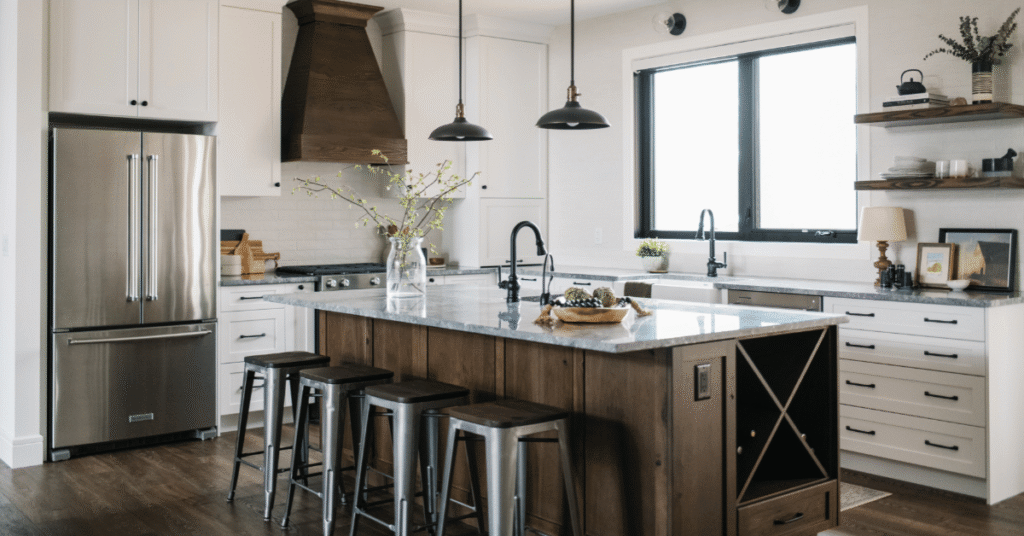
No. Rustic describes the character of the wood, not one specific design style. A traditional raised-panel door can emphasize a classic look, while a reverse-raised panel can provide a cleaner, shaker-style appearance. The species, stain, hardware, countertop and surrounding finishes will also influence whether the room feels traditional, transitional or more contemporary. This is an important design decision because many homeowners assume rustic wood is limited to heavily detailed or traditional cabinetry. It can feel much simpler when paired with a cleaner door profile and a restrained overall design.
Can You Use Rustic Wood as an Accent?
Yes. You don’t need to choose rustic wood for every cabinet in the room or your entire kitchen. Use it selectively to bring natural character without letting it dominate the entire space. Using rustic wood selectively can also create contrast beside painted cabinetry or a quieter wood finish. Decide where the character should be most visible, and choose that intentionally.
- A kitchen island
- A coffee bar or beverage station
- A bathroom vanity
- An accent cabinet
- A separate cabinetry zone
- Decorative panels on selected visible areas
Mixing rustic wood with painted cabinetry can also be a great solution when there are different design preferences in the home. It allows you to introduce the natural character of rustic wood in selected areas while keeping the overall look more balanced and versatile.
Final Thoughts
Rustic wood cabinets are perfectly imperfect. Their appeal comes from natural characteristics that cannot be duplicated, controlled or arranged to look exactly the same from one project to the next.
Choose rustic wood if you value uniqueness and are comfortable with an element of surprise. Work with a professional kitchen designer to select the door style, finish and locations where rustic character will have the greatest impact, while understanding which parts of the design will use non-rustic wood or veneer.
Please speak with your Authorized Superior Cabinets Representative for more information about rustic cabinetry. Contact a Superior Cabinets Kitchen Designer in Saskatoon, Regina, Edmonton, Calgary, or Winnipeg. If you can’t make it to a showroom, connect with an Authorized Dealer Partner.
Looking for inspiration? Explore real kitchens, islands and accent spaces on the Superior Cabinets Rustic Cabinets Pinterest board.
Rustic wood cabinets use natural wood selected to show more character, including knots, mineral streaks, sapwood, wormholes and noticeable variation in grain and colour. These characteristics are expected and help make every finished project unique.
No. Rustic refers to the character of the wood, not a single design style. A raised-panel door can lean traditional, while a reverse-raised or shaker-style profile can create a cleaner, more streamlined look.
Not every cabinet component is available in rustic wood. Doors and applicable solid decorator panels can display rustic characteristics, while veneer-finished ends, fillers, mouldings, toe kicks and other parts will use matching non-rustic wood or veneer.
No. A sample represents the general species and finish, but it cannot predict the exact knots, grain, mineral streaks, sapwood or colour variation in a complete project. Natural variation is part of choosing real (non-rustic) or rustic wood.
No. Knots, mineral streaks, sapwood, wormholes and colour variation are expected characteristics of rustic wood. Homeowners should review the manufacturer’s specifications and discuss acceptable variation with their kitchen designer before ordering.

Read more articles by Shahan Fancy
LOOKING FOR MORE?
Here are some additional helpful articles to check out:
Laminate Slim Shaker Door: Meet the IRIS door
Textured Painted Kitchen Cabinets: More Than a Trend (Sandwash)
Integrated Cabinet Lighting: Where to Use It and Why It Matters
Laundry Room Design Tips
Blue Kitchen Cabinets: Are They Still in Style?
Kitchen Garbage and Recycling Planning
A 2016 Kitchen Throwback: A Little Nostalgia, A Lot of Character
Fusion Finishes Collection Updates – 6 New Smooth Paint Colours
Laminate Collection Updates
The Sandwash Collection Updates
Thinking About Wine Bottle Storage?
Kitchen Trends
The Nature of Wood – What you need to know when selecting real wood cabinets
Introducing the Verra Door: A New Take on the Slim Shaker Cabinet
Going Deeper: Introducing 4 New One-Piece MDF Door Styles
New Rustic Knotty Alder Door Styles
Zenith Drawers with Integrated LED Lighting: A Bright Idea
Moments in Lighting: FlexyLED by Richelieu Now Available Through Superior Cabinets
The Urban Super-Matte Collection
The Sandwash Textured MDF Collection
The Thermofoil Collection
Melamine vs. Plywood
Sleek Door Profiles are a Dominating Trend
Kitchen Designer Cheat Sheet
Ways to Save Money on New Kitchen Cabinets
The Kitchen Cabinet Buyer’s Guide
Planning A Kitchen Renovation During A Pandemic
Common Corner Cabinet Types and Ideas
Bar Support Selection Guide
Butcher Block in the Kitchen, What You Should Know
Farmhouse Sink Considerations
Common Mudroom Design Oversights
New Paint Finishes on MDF for Summer
New Wood Stains – Inspired by Nature
Choosing the Right Drawer System